How to choose the right space for your professional portrait shoot
Why space matters
A thoughtfully chosen location coupled with a few intentional choices shapes more than the visual backdrop of a portrait — it influences mood, behaviour, and how efficiently we can work.
How space shapes a portrait
Visual frame. The background sets tone and context; it should support the subject’s story without competing for attention.
Light and clarity. Direction, softness, and colour of ambient light determine skin tones, contrast, and image sharpness.
Privacy and comfort. A quiet, private setting reduces self‑consciousness and helps one to relax and resort to authentic expressions.
Practical flow. A tidy, accessible space speeds setup, reduces interruptions, and lets us focus on expression and composition.
Psychological effects. Subtle environmental cues — warm light, predictable layout, and a welcoming atmosphere — lower stress and social anxiety, enabling more natural smiles and micro‑expressions.
Physiological support. Small comforts such as comfortable temperature and ventilation influence posture and facial tension, improving steadiness and presence in front of the camera.
Social signalling. A neat, intentional space communicates professionalism and trust to viewers of the final image.
Purpose of this guide
This is a practical resource for our clients to help choose the right location and make thoughtful choices for an enjoyable on‑location portrait session — whether at home, at work, or at another meaningful place.
Core Requirements for Professional Portrait Spaces
A few conditions are critical to ensure a smooth, efficient session and consistently strong results.
Room Size and Layout
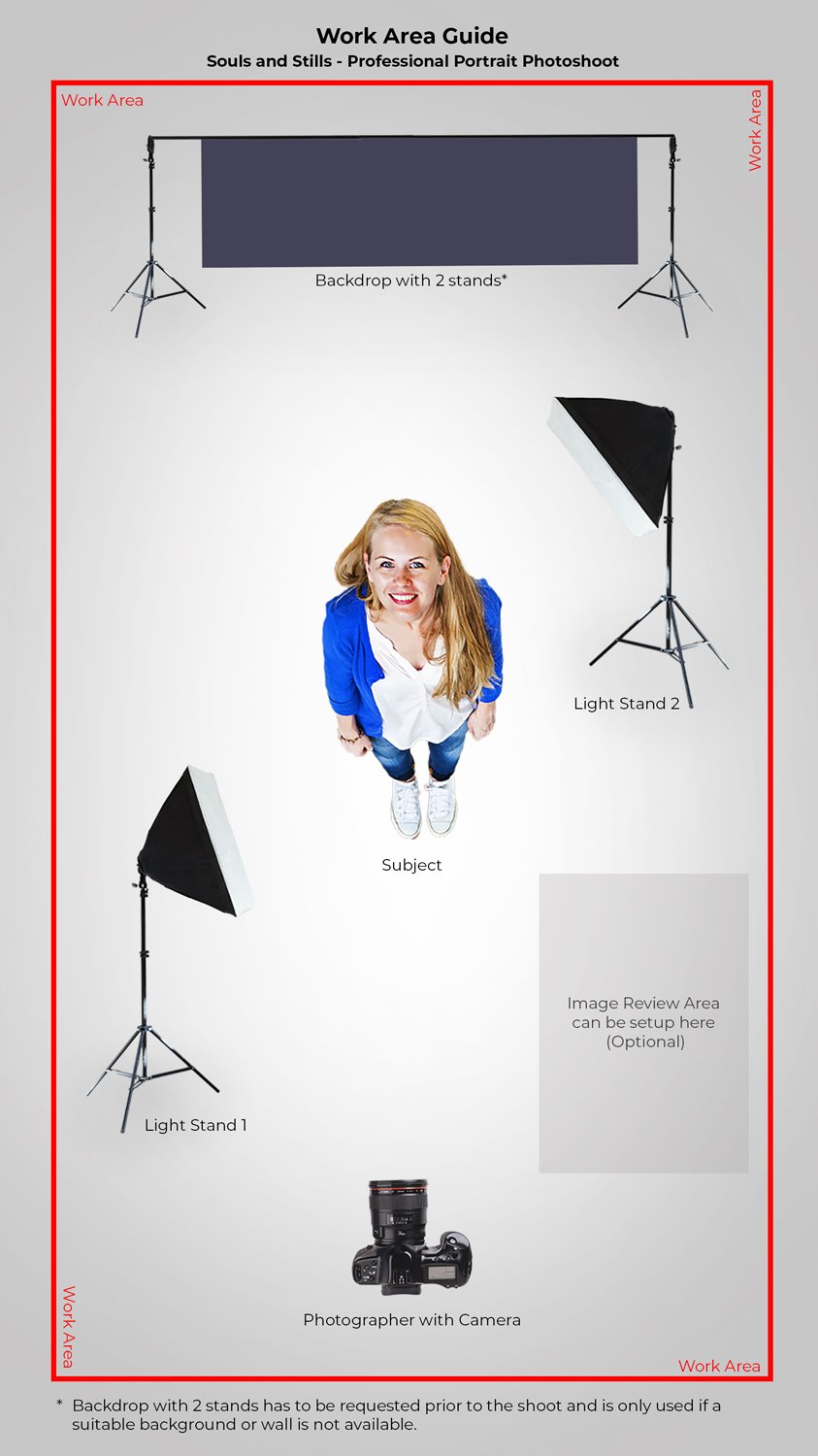
Minimum space Requirement
Clear working area
The space must accommodate two light stands, one reflector stand, and (if needed) two backdrop stands, plus room for the photographer in front of the subject.
Workflow space
Allow extra clearance behind the camera for movement and for any assistant or equipment. A minimum clear zone around the setup prevents accidental bumps and keeps the shoot flowing.
Image review area
We prefer to review and select images soon after the shoot. Please provide a small table and a chair (this may be in the same room or a nearby area) so we can view images together comfortably.
The diagram shows the minimum space required to conduct the photoshoot for a professional portrait.
Power Access
Single power socket. At least one accessible power outlet within the shooting space is required for lights, laptop, or other equipment. Extension leads are acceptable if safe and unobstructed.
Light Considerations
A controlled lighting environment is one of the most important factors for consistent, flattering headshots.
Ambient light
Natural light is helpful but not required. Diffused sunlight can produce soft, flattering tones and that combined with professional lighting can achieve excellent results in any location. Conducting the photoshoot in an area that lacks ambient light is still possible however, the final result maybe different to the pictures available on our website.
Avoid extremes. Spaces that are too dark force heavy artificial lighting; spaces that are overly bright create harsh shadows and blown highlights. Aim for even, controllable ambient levels.
Window placement
A window is preferred. A window provides a reliable, soft key source of light and gives us flexibility with direction and mood. Please note the placement of subject and equipment in relation to the window in the Work Area Guide Diagram.
No window? No problem. If a window isn’t available in the location, please send photos of the room in advance so we can plan alternative lighting and backdrop options.
When windows are positioned directly behind the subject, a few additional considerations come into play:
Exposure balance. To capture both the subject and the outside view, more images than usual may need to be taken. This ensures we have options where the subject is well lit and the background is properly exposed.
Background limitations. Depending on lighting conditions, the full view through the window may not appear in the final image. Some details can be lost or softened to keep the subject as the focal point.
Reflections from equipment. Professional lighting may occasionally create reflections on glass surfaces. While every effort will be made to minimize these, certain angles or conditions may make reflections unavoidable and could subtly affect the final image
Light consistency and color temperature
Keep color temperatures uniform. Mixed lighting (cool fluorescent or blue‑tinted sources combined with warm tungsten) creates color casts that are difficult to correct and can make skin tones look unnatural.
Avoid RGB or decorative LED lighting as a primary source. Coloured LEDs can be used creatively in the background if they are part of the client’s identity, but they should not be relied on to light the subject.
If unusual lighting is important to the concept, tell us ahead of time. We’ll discuss how to control or balance it so the final images remain professional and true to life.
Practical tips
Close heavy curtains or blinds if direct sunlight is creating harsh contrast.
Turn off or cover coloured lamps and RGB strips during the shoot unless they are intentionally part of the look.
If possible, choose a room with neutral wall colours to avoid unwanted colour reflection on skin and clothing
Background and Clutter
A clean, considered background keeps the viewer’s attention on the subject and supports the portrait’s message. Below is a polished, client‑facing version you can include in your guide.
Neutral or meaningful background
Subtle is best. Plain walls, gentle textures, or a few meaningful décor items work well. The background should support the portrait’s story without competing for attention.
Avoid visual noise. Remove clutter, busy patterns, and distracting objects that draw the eye away from the subject.
Choose backgrounds with purpose. A textured wall, a tidy bookshelf, or a simple architectural detail can add character while remaining unobtrusive.
Contrast and separation from background
Create separation. Ideally the colour of the background or wall should be different to the color of subject’s hair and clothing so the subject sits clearly separated from the background in the frame.
Not a deal breaker. If contrast isn’t possible, the photographer will use lighting, distance, and shallow depth of field to separate the subject from the background. Paying attention to contrast up front, however, makes the final image significantly stronger.
Comfort and practicality
Temperature and ventilation. The space should be comfortably warm or cool and well-ventilated so the subject can relax throughout the session.
Seating and breaks. Provide a chair and a small area to rest between shots; short breaks help maintain energy and natural expressions.
Wardrobe and mirror. A mirror and a small area to change or adjust clothing make quick fixes easy and keep the shoot moving.
Noise levels and privacy
Quiet enough to focus. Low ambient noise helps the subject concentrate and follow direction; consider turning off noisy appliances or choosing a quieter time of day.
Privacy matters. A location away from busy corridors or onlookers helps subjects feel at ease and more willing to show authentic expressions.
Considerations for shooting indoors versus outdoors
Choosing between an indoor or outdoor location affects control, comfort, and the final look of your portraits.
Why indoor shoots are easier to control
Predictable lighting. Indoors we can shape light precisely with modifiers and reflectors, avoiding sudden changes from clouds or sun angle.
Fewer distractions. Private indoor spaces reduce interruptions from passersby, traffic noise, or unexpected activity.
Comfort and privacy. Indoor locations make it easier to provide seating, changing areas, refreshments, and a quiet place to review images.
Consistency and efficiency. Controlled conditions speed setup and allow us to focus on expression and composition rather than firefighting environmental variables.
When outdoor shoots make sense
Authenticity and identity. Outdoor locations can be ideal when a client’s personal or professional identity is tied to a place — for example, an architect at a building they designed or an artist in their studio garden.
Unique atmosphere. Natural backdrops, seasonal colour, and environmental context can add narrative and visual interest that is difficult to replicate indoors.
Creative possibilities. Sunlight, reflections, and wide vistas offer creative lighting and compositional options that enhance certain portrait styles.
Trade‑offs and practical risks outdoors
Uncontrolled light. Weather, cloud cover, and changing sun angles can force rapid adjustments and limit consistent results across a session.
Noise and interruptions. Public spaces increase the chance of onlookers, background noise, and logistical delays.
Logistics and permissions. Some outdoor sites require permits, parking, or advance coordination that can affect timing and cost.
Equipment considerations. Wind, uneven ground, and lack of power require extra gear and safety precautions.
How we manage outdoor shoots
Advance planning. If you prefer an outdoor location, please share photos and the intended time of day so we can plan lighting, backup options, and any permits or access needs.
Contingency options. We could discuss ahead of the shoot about alternative nearby indoor locations or flexible scheduling windows to avoid poor weather or heavy foot traffic.
On‑site adjustments. We bring portable modifiers, sandbags, and quick‑deploy backdrops to maintain control and protect equipment if we are informed ahead of the shoot.
Wrap Up
Not every space will meet every recommendation, and that’s perfectly okay.
The core requirements are essential, but beyond those we treat each location as an opportunity to be creative rather than a checklist to be feared. If something can’t be achieved exactly as described, we’ll adapt our approach on the day and use lighting, composition, and small adjustments to get the best possible result. Early notice of any limitations—like tight space, unusual lighting, or nearby foot traffic—helps us plan ahead and avoid surprises, and sharing a few photos or a short description of the space in advance makes a big difference to the final outcome.
Share a few photos or a brief description of your chosen space and we’ll suggest simple, practical adjustments to make the session run smoothly.